
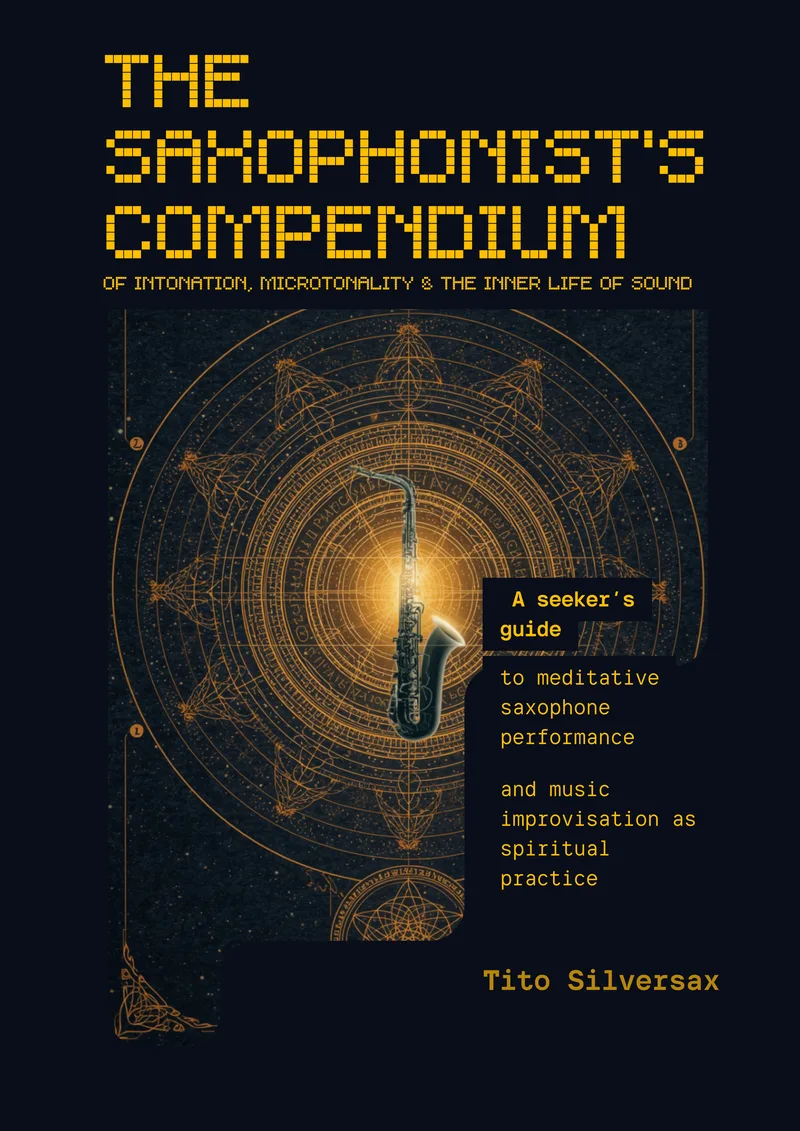
A guide for the saxophonist who suspects there is more — in the physics of the horn, in the intervals between the notes, in the ancient traditions that treated sound as a spiritual technology.
PDF & EPUB · Instant download · No DRM
I am Alberto Martir — known in some circles as Tito Silversax. I am a soprano saxophonist based in Cleveland, Ohio, and for years I have been consumed by a single question: what is actually happening when a saxophone speaks?
The standard answers never satisfied me. I kept digging. Into the physics of the harmonic series and what it reveals about intonation. Into the microtonality embedded in Arabic maqamat, Turkish makam, Persian dastgah, and West African tonal traditions. Into the sacred geometry that underlies both musical tuning and the proportions of the natural world. Into Sufi writings on sama — sound as a path to the divine. Into the Kabbalistic understanding of vibration as a fundamental spiritual act.
The Saxophonist's Compendium is everything I found. Written for the player who wants to understand, not just execute.
Your saxophone is already playing everything. Every pitch contains within it the entire universe of overtones — a built-in tuning guide that predates Western notation by millennia. Learn to hear them, bend them, and play them deliberately.
Western notation divides the octave into 12 equal slices. The saxophone doesn't care. This section maps the alternate fingerings that unlock the pitches between the pitches — the notes your sheet music never told you existed.
Arabic maqamat. Turkish makam. Persian dastgah. West African tonal traditions. These systems didn't fracture the octave arbitrarily — they followed the harmonic series where it led. Here is how to apply their logic to your instrument and your ear.
The mathematical ratios that structure musical intervals are the same ratios that appear in the growth of living things, the proportions of ancient architecture, and the movements of celestial bodies. This is not metaphor. This is physics — and it changes how you understand what you are doing when you play.
Two mystical traditions with sophisticated, practical theories of sound as spiritual technology. The Sufi concept of sama as divine audition. The Kabbalistic understanding of vibration as intentional act. These frameworks offer not mystification but a vocabulary for what serious musicians already know: that something extraordinary can happen when you play.
Everything above converges in a practical approach to working on the horn. Not scales as punishment — scales as a form of meditation. Not technique as the goal — technique as a doorway. A daily practice that is simultaneously music, physics, and prayer.
The Saxophonist's Compendium
PDF & EPUB · Instant digital download
No subscription · No DRM · Yours to keep